Monday, 16 April 2012

A Garden Interlude and...........!

There has been a lot of hard work in the garden recently due to the time of year
A lot more to come due to a number of changes
For now a TEST for my dear blogging friends

Do you see any difference to the garden in the 9th photo here?


And on an entirely different note
I have never watched the TV series Doc Martin
Knowing that Doc Martin was the name of some footwear I never even checked it out
then I hear it mentioned in a few different places including on an American blog
Next I read that the doctor who is medical adviser to our daily newspaper was very involved, not only advising on set but also supplying the medical story lines.
Apparently every single one of them are based on real situations
So, off to Amazon where I was able to buy a set of all 5 series
at the handsome price of £20 (aprox $32)
Decided to begin watching Saturday evening - I was hooked and watched 4 episodes of series 1 in one sitting! It was only the lateness of the evening that brought my viewing to a halt

For the uninitiated - a brilliant surgeon working in London develops   a phobia of blood
He moves to Cornwall and becomes a general practitioner in a beautiful seaside Cornish village where the locals generally live a slow and simple life compared with London
One feels sorry for Doc Martin as he tries to adjust
He is a brilliant doctor but has no people skills or bedside manner so it takes several episodes before he manages to endear himself to the locals and become accepted and loved
Of course it is a comedy and the scenery is great
How am I ever going to fit in about 60 hours of viewing!


Thursday, 12 April 2012

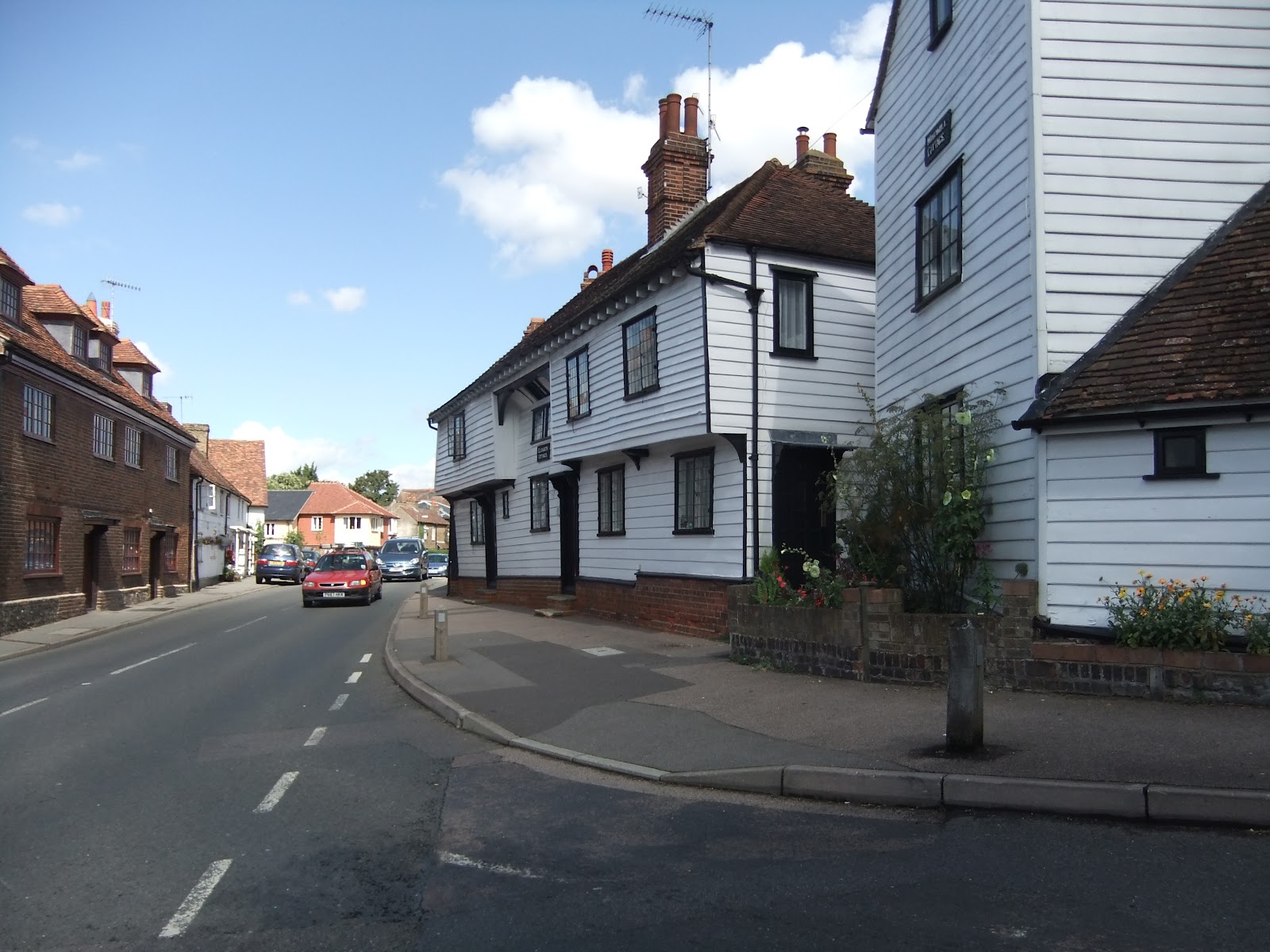
Eynsford Village, Kent

From Lullingstone Roman Villa into the village of Eynsford on this pleasant August day where we will walk a little and have some lunch before our next visit which I am sure you will find interesting in another post


Not sure what this newsagent sold - it appeared to be everything!


The Ford across the river


for the heavy goods vehicles and coaches that cannot cross the bridge


a small truck who chooses the ford and not the bridge
I guess there was someone coming in the opposite direction
it is only one-way


The Plough pub alongside the river
we checked it out for lunch but it was too 'up-market' for what we wanted at this time of day


a skip lorry leaving the ford
and looking at the church ahead
The Church of Saint Martin is built of flint in the Norman and Early English styles with the oldest part dating back to 1100. Its tower has a wood-shingled spire and a clock surrounded by a quotation from Browning, "Grow old along with me, the best is yet to be."


as we choose to walk back over the bridge


glad we don't have to get our feet wet


We pass some pretty gardens as we walk around the village


we have a much simpler lunch here


a novel way to display ones flowers


and now on our way back to the car park
have not been to this village for a long time
can remember taking my children to play in the water


Sunday, 8 April 2012

Lullingstone Roman Villa

Here in late August we are visiting the excavated remains of Lullingstone Roman Villa
It is not too far from home but due to extensive new roads and junctions for the latest Channel Tunnel terminal on the other side of    the River Thames we managed to take the wrong exit (why do we not trust the sat nav more) and added some miles to our journey


I personally do not like the coloured lights but they were in cync with an overhead commentary
especially when viewing these fine mosaics below


The following history written in smaller script was taken from the English Heritage website

Evidence of the villa is first recorded in about 1750, when the fence around Lullingstone deer park was being renewed, and holes for posts were dug through a previously unknown mosaic. (1) These events were reported by John Thorpe in 'Custumale Roffense', published in 1788, when Lullingstone Chapel was also illustrated having been drawn in 1769.

EUROPA MOSAICS

First, the central core of the house was radically altered when an apsidal dining room or 'triclinium' was built across the line of the western corridor, splitting it in two. This dining room, with its attached audience chamber, and the mosaics within the rooms, demonstrate the increasing prosperity of the villa. 
Within the triclinium, which has been claimed as a 'caenaculum', where diners would have reclined on a single crescent-shaped couch, the mosaic tells the mythical story of the Rape of Europa, who was abducted by the god Jupiter disguised as a bull. One of the accompanying cupids attempts to intervene by holding on to the bull’s tail.
The main mosaic panel in the audience chamber tells the story of Bellerophon, Prince of Corinth, on the winged-horse Pegasus, killing the Chimæra, a fire-breathing she-monster. 


The first building for which we have evidence was certainly constructed by AD 100 and perhaps as early as AD 80–90.


In the second half of the second century, possibly around AD 150, but perhaps as late as AD 180, the simple winged-corridor house was substantially enlarged. Such development normally suggests increasing prosperity on the part of the owners.


Skeleton of a baby, late 2nd century


From the Paganism of early times Christianity took over and we see here a chapel within the villa
an early house church


Dog skeleton, 364-378


To the right of this photo we see a deep well hole
standing next to it and looking over the fence felt quite scary as it was so deep


Map of the Roman Empire which was the first Western Super State
It was at it's greatest AD 117
Brittania was a province of the Roman Empire for nearly 400 years


I have made this photo larger in the hope you can see the different commodities being produced around the empire at that time
England is metal, wool, animal skins and wild animals


Hope you found this interesting
We will go into the local village and have lunch (next post) before visiting somewhere very different this afternoon