Saturday, 16 October 2010

Jamie Oliver's Childhood Home

The Cricketers, Clavering. A delightful 16th century English Country Inn with award winning food and accommodation, roaring log fires, beamed ceilings and a friendly relaxed atmosphere.

On our way home from Saffron Walden recently we decided to stop for afternoon tea at Jamie Oliver's parents pub which was only 3 miles off the road we were travelling on. It was late afternoon and very quiet as lunches had finished and evening dinner not for a few hours.
Remember, this is a pub and restaurant not a tearoom.
They obliged us with tea and delicious home made fruit cake
and we had the place to ourselves.


Certainly good food. A paragraph from the advertising flyer.

"Here at the Cricketers, we take the sourcing of really good produce and ingredients very seriously; the meat is properly hung and the fish is always fresh, using local, seasonal and organic where possible. The entire menus are expertly prepared on the premises by our team of creative and talented chefs, led by our Head Chef, Justin Greig, who is passionate about using excellent produce. We make fresh bread for our guests each day and our son, Jamie Oliver, supplies the wonderful seasonal vegetables, herbs and leaves from his certified organic garden nearby, which are an absolute delight"

One can see where Jamie gets his love of good food and cooking from.

While in Cambridge recently we had lunch at one of Jamie's Italian Restaurants and that was a treat. I need to get my photos from that day out sorted but I will post on his Cambridge restaurant in the next post.

It has turned cold here and I have almost finished the work I need to do on the garden for this year. It has been a busy week with meals out with folks, folks to a meal here and the continuing medical appointments. My son is again in Brazil where the temperature is 38C but I think I prefer our cold to that, especially as he is covered in mosquito bites.

Just a note on English Pubs for any in other countries who do not know their origin. Pub is short for Public House. In centuries gone by they were mostly Inns for travellers where they could find food and rest and a place to rest their horses or change them if need be. Later many where places where people came to meet together to socialise as generally ordinary people did not entertain in their homes as they do now. In recent decades pubs were known for excellent reasonably priced hearty meals or Ploughman's lunches in the bar but in more recent times most now have restaurants too. 

Monday, 11 October 2010

Castle Ruins at Saffron Walden

During our walk around Saffron Walden in my last post we stopped off at the castle ruins and museum. The castle was built by Geoffrey de Mandeville 3rd Earl of Essex in the 1130's. The flint tower ruins of flint and mortar are all that remain.


In the grounds here we see a Glacial Erratic Boulder
Glaciers carried lumps of rock during the great Anglian ice-age about 500,000 - 10,000 years ago.


Medieval stone coffins 13th - 14th century


 Snippets from the museum. Imagine being transported to Australia for 7 years for stealing 6 ducks!


17th century wall tiles


In the past some bloggers have shown an interest in thatched roofs and wondered how they are made. Here is a picture of the various layers that go to make the completed roof.

Wednesday, 6 October 2010

It's Saffron Walden Today

This Autumn has been a time of delving deeper into our own County as Alan's medical problems in the Summer prevented us from having a holiday and this post continues that theme.

For the 400 years of the Roman era there was never more than a small settlement in what the later Saxon inhabitants called
"weala-denu" ("Valley of the Britons") and we now call Saffron Walden. By the writing of the Domesday Book in 1086, however there was an estate of about 120 households. There are now about 15,000 living in the town which is in easy reach of Cambridge and London.


We arrive in the market place
where a market has been held since the thirteenth century

The drinking fountain


Noting the library

The Georgian Townhall where the tourist information centre is now housed


Before taking a walk around the town we are going to have lunch in the department store (painted white to the right of this photo)

and watch the world go by

Taking random pictures as we walk around, this is
The Corner Cupboard

The Parish Church
The earliest features of the largest parish church in Essex date from 1250 but the majority of the church was built between 1470 and 1525. The size reflects the wealth of the town. The spire is
193 feet high.


The almshouses


An interesting window

The youth hostel is a grade I listed building and is one of the finest medieval buildings in the town. It was built as a combined shop, home and warehouse in the 1490's. We see the original door no longer in use so entry around the side

We will just wander around noting the different homes


Probably old merchant's homes


We can step through this alleyway in the middle of the street and enter a lovely park but we are not planning to walk around it


Until we reach this second hand book store
I promise you, I did not go in


and  finish our tour at the Cross Keys Hotel which is a 15th century timber framed former house and shop
Half way round we did visit the castle museum but will keep that for another post
We are now on our way back to the car park as we plan to have tea at Jamie Oliver's parents pub on the way home, the place where he grew up and learnt to cook

Saturday, 2 October 2010

2000 years of History in Colchester

A visit to Colchester Castle Museum takes one through 2000 years of some of the most important events in British history.
Once capital of Roman Britain, Colchester has experienced devestation by Boudica, invasion by the Normans and siege during the English Civil War.
I am certainly not attemping to go through that history here but offer some photos and snippets of information from our recent visit  not having been there since we took our children when they were young even  though it is only 45 minutes drive away


 1066 was the defeat of the English by the invading army of Duke William of Normandy. After his victory at the Battle of Hastings, William strengthened his hold on the defeated English by ordering castles to be built throughout the country.
Colchester was chosen for its port and its important military position controlling the southern access to East Anglia. In 1070 work began on Colchester Castle, the first royal stone castle to be built by William in England.

The castle was  built around the ruins of of the colossal Temple of Claudius using the Roman temple vaults as its base, parts of which can still be seen today.

Some clever and fun topiary in the garden outside


A 50 ft deep well


The Berryfield mosaic 150AD


Pots 1500 - 1000 BC


The first evidence of human beings in this country is dated to around 500,000 years ago
These were the commonest tools in use 500,000 - 40,000 years ago


On our way down to the original vaults of the Temple  on which the present castle was built

Roman Temple foundations

A replica of the Roman Temple of Claudius AD54 and we are at this moment in the area shown in the 2 central 'domes' above
The Temple was above where we are now sitting
Original door frame

17 ft thick castle walls

Seen here a bone cemented into the wall, probably an animal bone

The prisoners were not all bad!

We will be going through this gate and up a stone spiral staircase into the roof


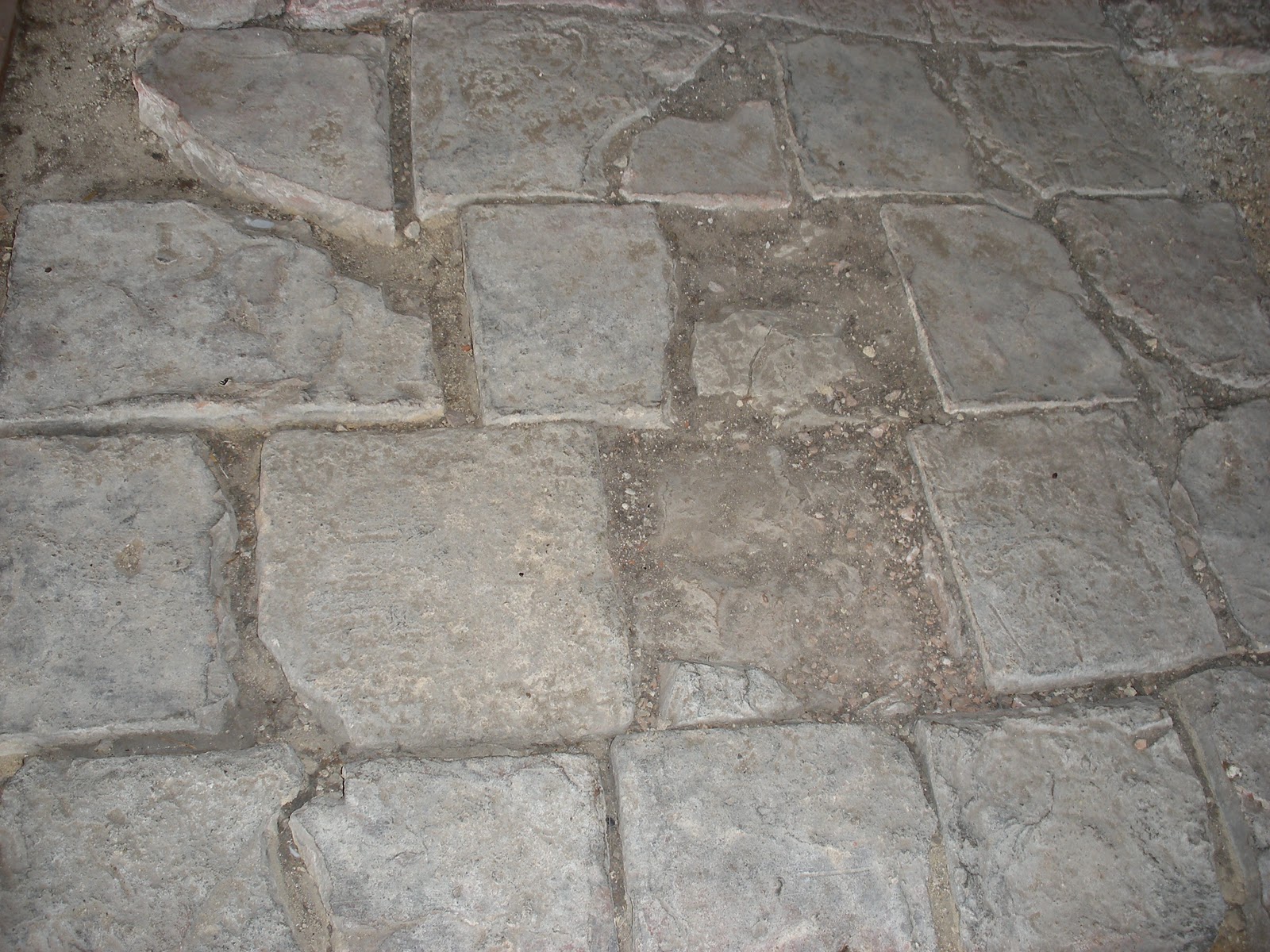
Original flooring

Roof was used as a chapel

Among what is left on top of the roof of one of the towers


A tree growing out of the roof
Well that's the tour for today - I will leave you with a few interesting snippets
Used as a prison for 800 years
We had no written language until the Romans arrived
Britain was full of tribal Kingdoms
There were only local warriors to fight the Roman soldiers, fishermen and potters etc.
Thomas A Becket, King John, and William. 1st and 2nd came here