Thursday, 12 April 2012

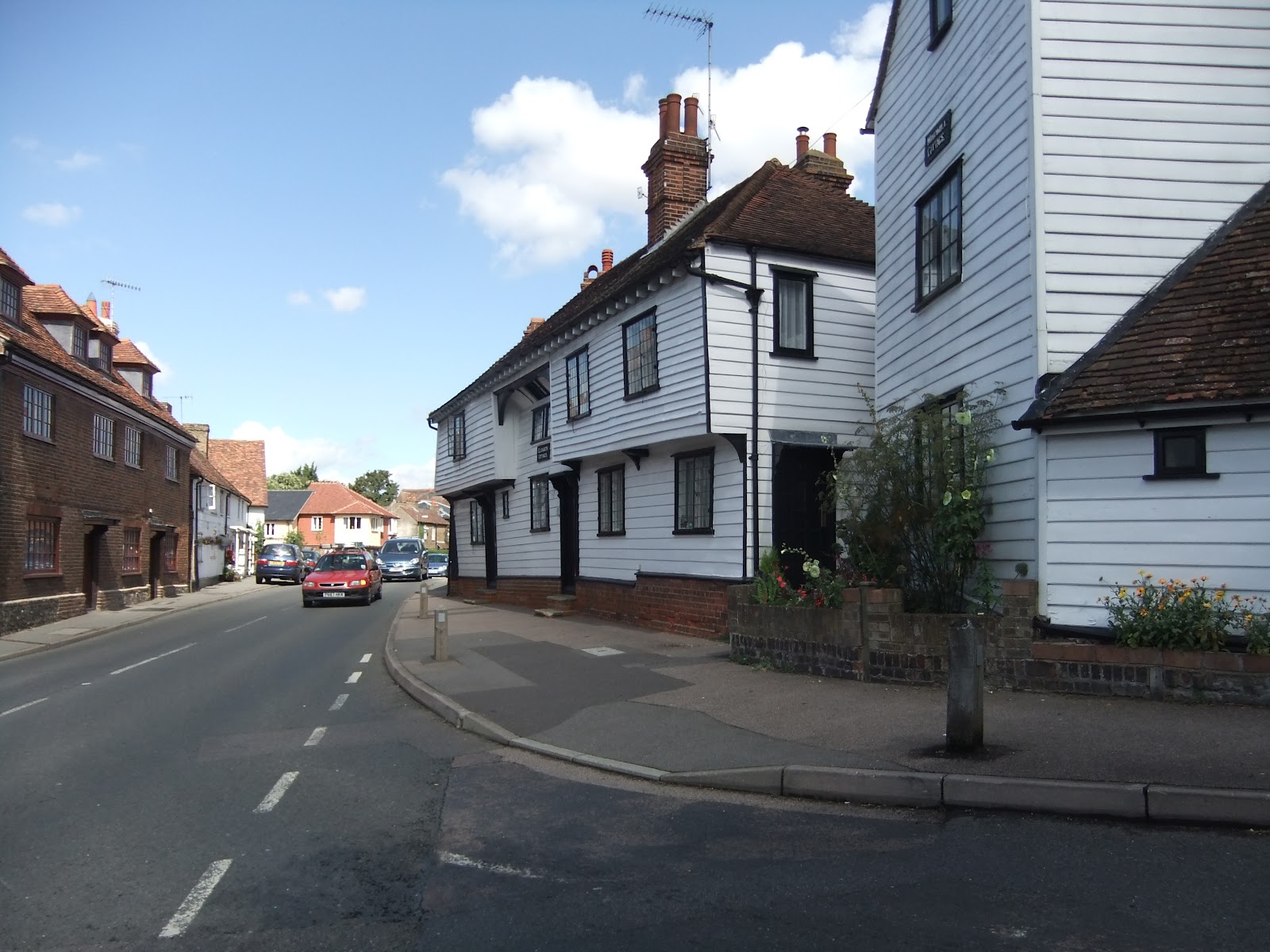
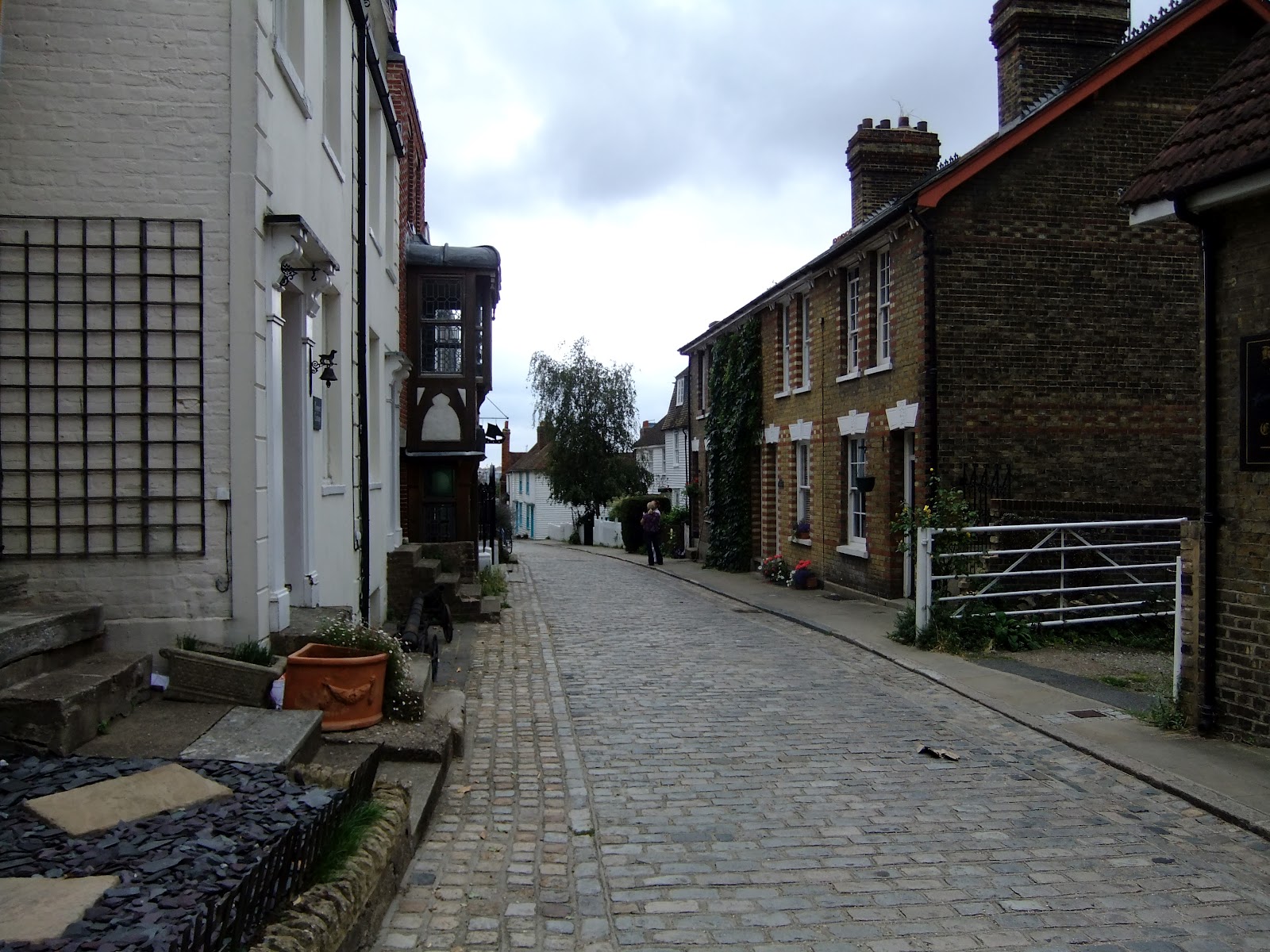
Eynsford Village, Kent

From Lullingstone Roman Villa into the village of Eynsford on this pleasant August day where we will walk a little and have some lunch before our next visit which I am sure you will find interesting in another post


Not sure what this newsagent sold - it appeared to be everything!


The Ford across the river


for the heavy goods vehicles and coaches that cannot cross the bridge


a small truck who chooses the ford and not the bridge
I guess there was someone coming in the opposite direction
it is only one-way


The Plough pub alongside the river
we checked it out for lunch but it was too 'up-market' for what we wanted at this time of day


a skip lorry leaving the ford
and looking at the church ahead
The Church of Saint Martin is built of flint in the Norman and Early English styles with the oldest part dating back to 1100. Its tower has a wood-shingled spire and a clock surrounded by a quotation from Browning, "Grow old along with me, the best is yet to be."


as we choose to walk back over the bridge


glad we don't have to get our feet wet


We pass some pretty gardens as we walk around the village


we have a much simpler lunch here


a novel way to display ones flowers


and now on our way back to the car park
have not been to this village for a long time
can remember taking my children to play in the water


Sunday, 8 April 2012

Lullingstone Roman Villa

Here in late August we are visiting the excavated remains of Lullingstone Roman Villa
It is not too far from home but due to extensive new roads and junctions for the latest Channel Tunnel terminal on the other side of    the River Thames we managed to take the wrong exit (why do we not trust the sat nav more) and added some miles to our journey


I personally do not like the coloured lights but they were in cync with an overhead commentary
especially when viewing these fine mosaics below


The following history written in smaller script was taken from the English Heritage website

Evidence of the villa is first recorded in about 1750, when the fence around Lullingstone deer park was being renewed, and holes for posts were dug through a previously unknown mosaic. (1) These events were reported by John Thorpe in 'Custumale Roffense', published in 1788, when Lullingstone Chapel was also illustrated having been drawn in 1769.

EUROPA MOSAICS

First, the central core of the house was radically altered when an apsidal dining room or 'triclinium' was built across the line of the western corridor, splitting it in two. This dining room, with its attached audience chamber, and the mosaics within the rooms, demonstrate the increasing prosperity of the villa. 
Within the triclinium, which has been claimed as a 'caenaculum', where diners would have reclined on a single crescent-shaped couch, the mosaic tells the mythical story of the Rape of Europa, who was abducted by the god Jupiter disguised as a bull. One of the accompanying cupids attempts to intervene by holding on to the bull’s tail.
The main mosaic panel in the audience chamber tells the story of Bellerophon, Prince of Corinth, on the winged-horse Pegasus, killing the Chimæra, a fire-breathing she-monster. 


The first building for which we have evidence was certainly constructed by AD 100 and perhaps as early as AD 80–90.


In the second half of the second century, possibly around AD 150, but perhaps as late as AD 180, the simple winged-corridor house was substantially enlarged. Such development normally suggests increasing prosperity on the part of the owners.


Skeleton of a baby, late 2nd century


From the Paganism of early times Christianity took over and we see here a chapel within the villa
an early house church


Dog skeleton, 364-378


To the right of this photo we see a deep well hole
standing next to it and looking over the fence felt quite scary as it was so deep


Map of the Roman Empire which was the first Western Super State
It was at it's greatest AD 117
Brittania was a province of the Roman Empire for nearly 400 years


I have made this photo larger in the hope you can see the different commodities being produced around the empire at that time
England is metal, wool, animal skins and wild animals


Hope you found this interesting
We will go into the local village and have lunch (next post) before visiting somewhere very different this afternoon


Thursday, 5 April 2012

Upner Village, Kent

Having left Upnor Castle a quick walk around this little village
our last of the day before driving home


The pub on the corner


An old horse trough


on the road down to the river


House for sale - wonder what it looks like inside


Another pub at the other end of the road

Monday, 2 April 2012

Upner Castle, kent

Another castle - hope you are not getting bored with castles but we seem to have visited quite a few last year - so we are back in August


Set in tranquil grounds in the riverside village of Upner stands this rare exanple of an Elizabethan artillery fortress. It was built on the orders of Queen Elizabeth I in 1559 to defend her warships moored in the river and Chatham Dockyard. It proved ineffective in 1667 when the Dutch sailed up the river to attack the British fleet at anchor


It was also used to store gun powder for the Navy


It is now used as a wedding venue!
sitting on gun powder barrels!


Quite a step up if you wanted to get up here


List of officers in charge back to 1648


Upnor village next  


Wednesday, 28 March 2012

Ramblings for The End of March


These last 3 months have been so full and passed so quickly. It has been hard to choose which direction to go sometimes when 3 important events have clashed.

Like this past weekend for instance, I had to choose between a residential weekend at Pilgrims Hall for team and trustees or a conference at my church.
I chose the conference in the end as there were lectures on some very important issues we face in our world today.
I have been asked to post on the conference but that would be impossible so I pass on a link instead for those interested
(Go to Homepage and click on audio/video on the menu bar)
  
Professor Dr. Peter Jones who is the director of truthexchange shared his Godly Wisdom and insights on the infiltration of 
Neo-Paganism into some of the church and society at large
He has written many books on the subject

We first met Dr. Jones last year and as an aside it is a small world.
Although he lives in San Diego, California, he was born and bred in my home town of Liverpool and was a friend of John Lennon when young
It turns out that he and I were awarded an Art Scholarship around the same time but my parents would not allow me to take a place at art school insisting on grammar school instead of the art school that some of the Beatles attended

That same weekend, as members, we had an important AGM of our local Conservative party to attend where there was some crucial voting to make sue that our Christian Member of Parliament had a team around him who would support him in his Godly endeavours.
We had the largest turn out for our town ever and the opposition were so fazed that they phoned the local Fire Brigade to try and have the meeting stopped on grounds of health and safety. The meeting went ahead with fantastic results.

Our weather this last week has been fantastic
Temperatures in the low 70's f. Virtually unheard of for March
While some were enjoying it others were dealing with 
3 wild fires around the UK
Added to that hose pipe bans are due to come in beginning of April as we are in a serious drought situation after 3 dry winters

Well the good weather brings lots of hard work with it
Much pruning and tidying etc of the garden but we are also planning and working on lots of changes. A garden is never static and lots of things need to be replaced and we are also getting rid of one of our sheds and our greenhouse. I no longer do the raising of my own plants so the green house has ended up a dumping ground recently and our bottom shed is falling down 
More on that later

Friday, 23 March 2012

Maison Dieu, Faversham

Driving past this interesting site in Faversham, Kent we stopped to take a look
Unfortunately we were not able to go inside as it is only open on Saturdays

However, a significant fragment remains of this medieval hospital and hostel for kings built early in the 13th century.
For more than 3 centuries until it's foundation was dissolved in 1519 on the instructions of King Henry VIII, to grant all it's revenue and possessions to endow St. John's College Cambridge, the Maison Dieu was a considerable landmark along the pilgrim route for travellers to Canterbury, Dover and the Continent. 


I understand that the other part of the remains of this hospital is privately owned


Just a quick post as I will be at a conference this weekend and unlikely to get to my computer
Do hope that it is a good weekend for everyone