The colours of Autumn leaves are caused by yellow, orange and red pigments within them,which, in fact, exist all year. These colours are usually masked by chlorophyll, the green pigment which converts sunlight into the sugars that nourish the tree.
Throughout the summer, the chlorophyll is replenished by the tree itself. However as the days become shorter at the start of autumn, the tree takes it's cue to start preparing for the colder winter months. As a result, it stops replenishing the chlorophyll and the green pigment begins to disappear.
Once the amount of daylight falls below a threshold point - the exact amount varies from species to species - cells near the junction of each leaf and it's twig start to divide rapidly to form a dry, corky plug called an abscission layer. It is this plug that blocks the passage of sugars from the leaf to the rest of the tree, but also prevents chlorophyll being replenished.
In just a few weeks, the green pigment breaks down completely from the leaves to expose the colours that were previously hidden from view.
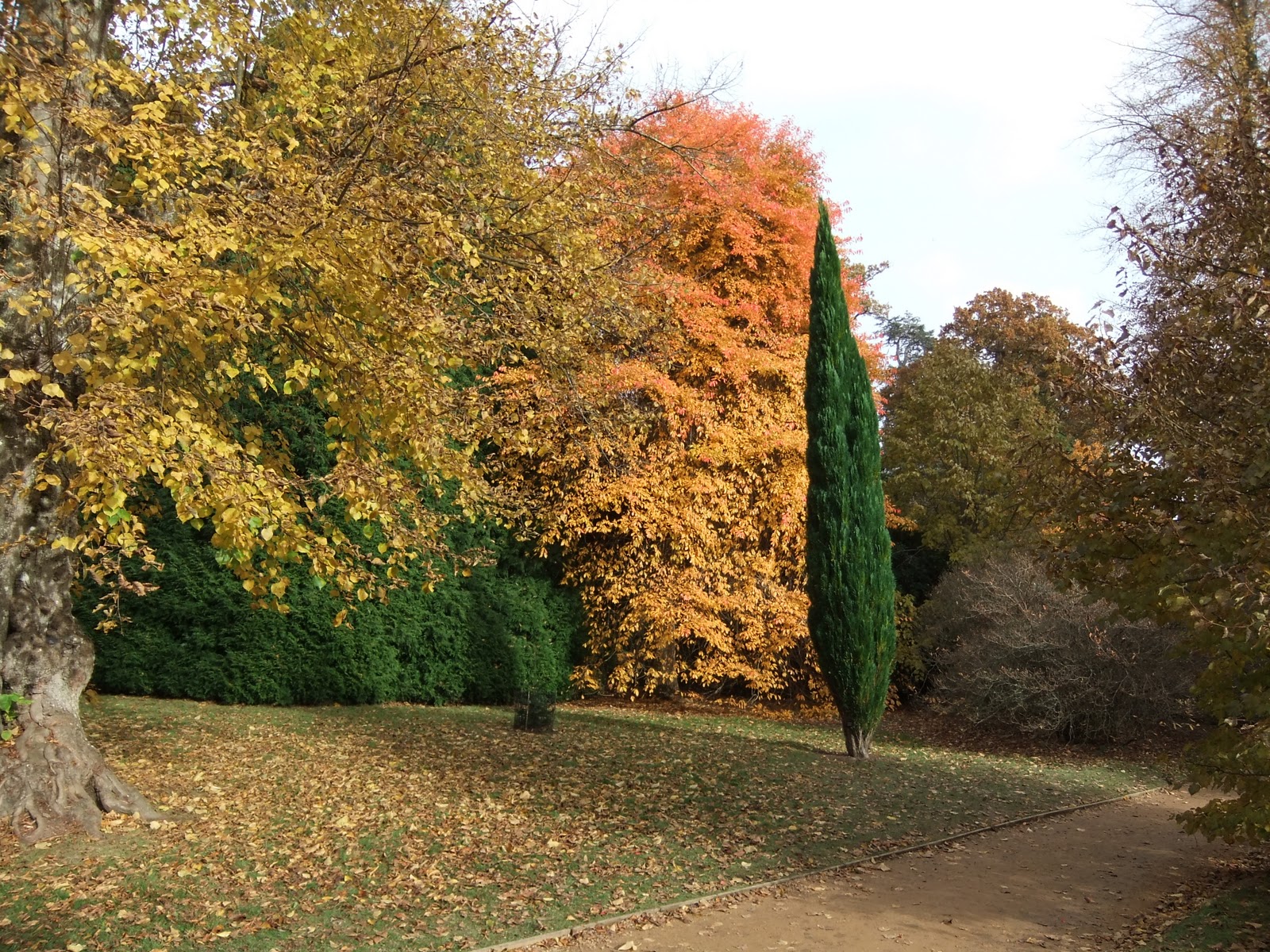
The orange hues of autumn seen in beech trees are carotenoids that give carrots and pumpkins their colour.
The yellow of lime trees are xanthophylls, a pigment found in banana skins, egg yolks and human blood plasma.
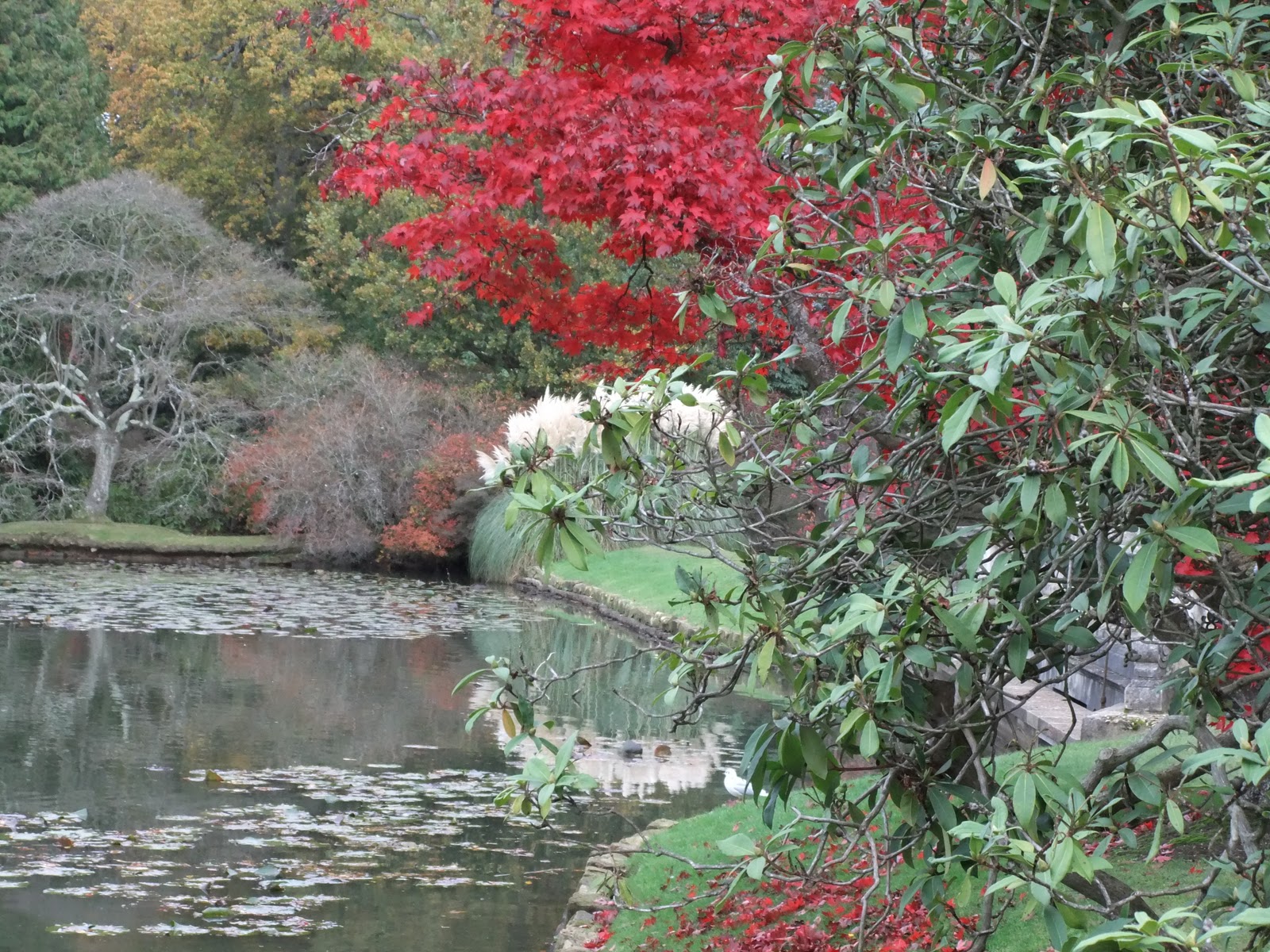
A class of pigments called anthocyanins create the reds of acers and ornmental cherry trees.
The end result of all this of course is sheer breath taking artistry for us as we see here in Sheffield Park Gardens.